




Introduction to Korean Beef Bulgogi Rice Bowls
Korean cuisine is a delightful adventure filled with rich flavors and appetizing dishes, but if you’re new to it, a fantastic place to start is with bulgogi. This traditional Korean dish features marinated, grilled beef, giving it a savory-sweet profile that’s simply irresistible. Not only is bulgogi bursting with flavor, but it’s also incredibly versatile. Whether served over fluffy steamed rice or wrapped in lettuce leaves, it has a unique appeal that can make any meal feel special.
So, why should you try your hand at making Korean beef bulgogi rice bowls? For one, the combination of tender, marinated beef, fresh vegetables, and perfectly cooked rice offers a balanced meal that’s both satisfying and nutritious. Plus, it’s an excellent way to impress your friends during a casual dinner gathering or to treat yourself on a cozy night in. According to a 2022 survey from the Korean Food Foundation, bulgogi remains one of the most popular dishes among both locals and international food lovers. This dish brings people together, encouraging sharing and connection, which is what we all seek when we sit down to eat.
When you’re making Korean beef bulgogi rice bowls, you’ll discover that the cooking process is quite straightforward. In fact, many ingredients used are pantry staples, and the marinade is simple yet effective. You’ll need soy sauce, brown sugar, garlic, and sesame oil—all of which are common in a typical kitchen. Want to enhance your cooking skills further? Check out Serious Eats for more insights on marinade techniques and tips to perfect this dish.
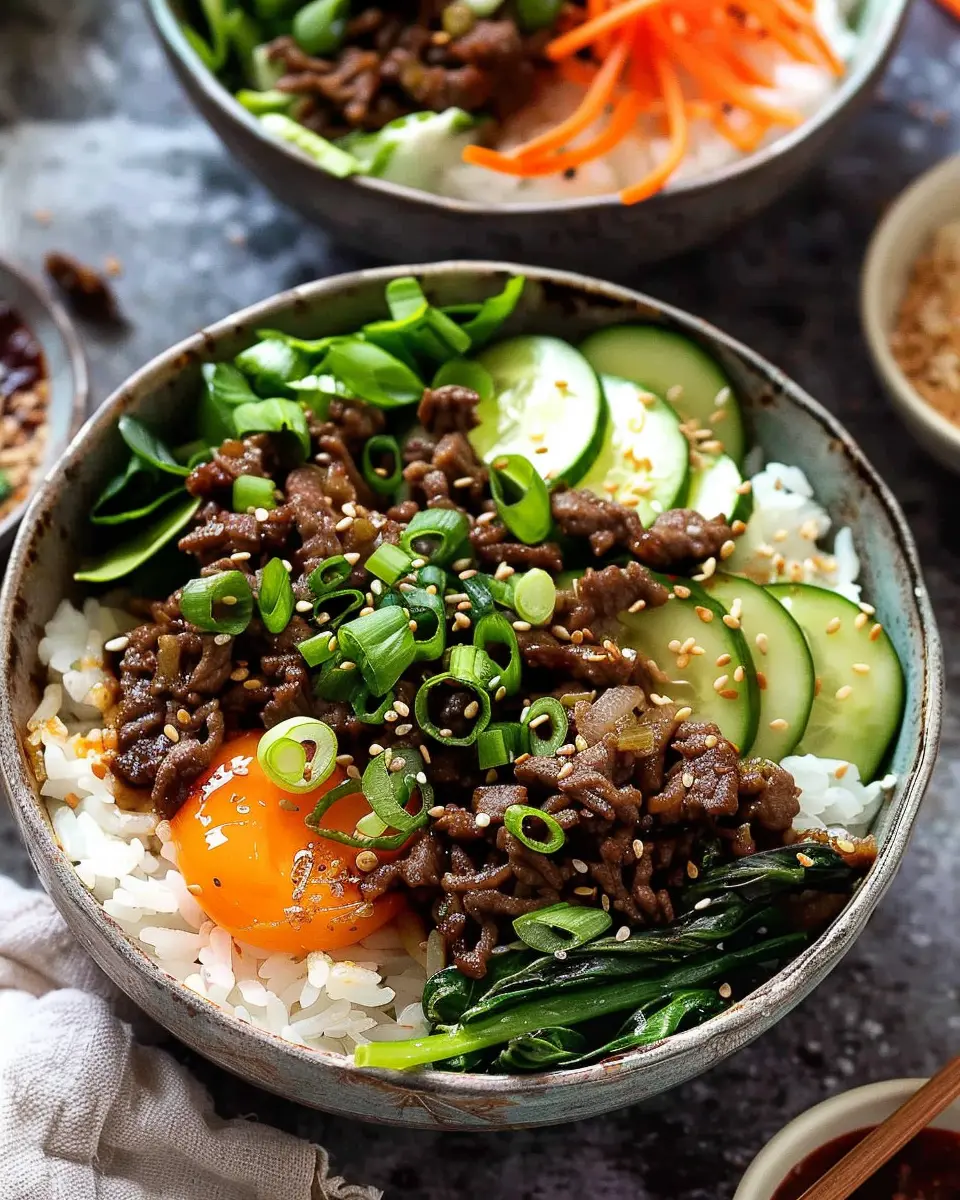
Lastly, what makes this dish so appealing is its adaptability. Feel free to customize your bowls with an assortment of toppings like sliced cucumbers, carrots, or even a fried egg on top! The possibilities are endless, and that’s part of the fun when you dive into making Korean beef bulgogi rice bowls. If you’re intrigued by vibrant flavors and want to explore the joys of Korean cooking, then you’re definitely in for a treat!
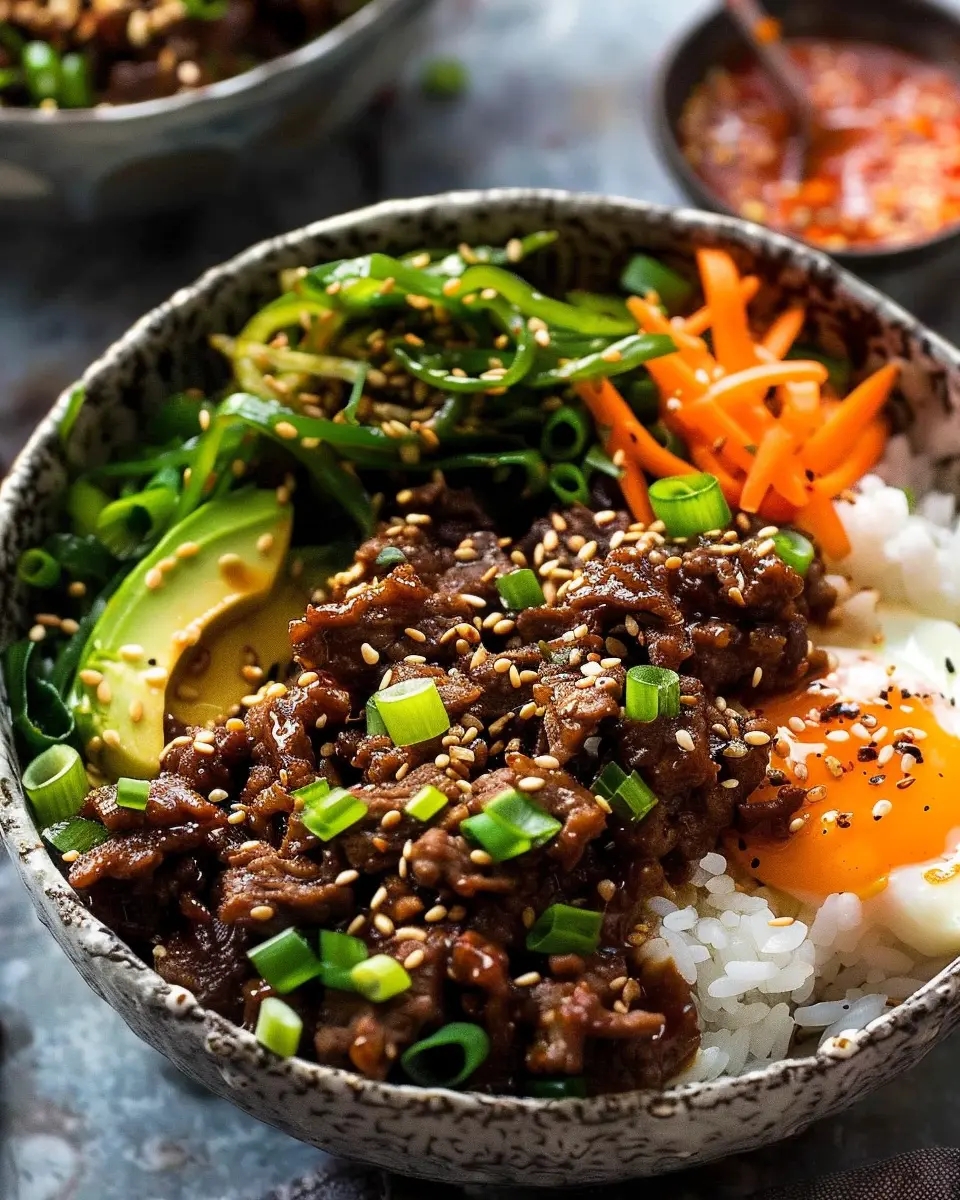
Ingredients for Korean Beef Bulgogi Rice Bowls
When crafting Korean Beef Bulgogi Rice Bowls, the right ingredients make all the difference. Let’s break it down into two key sections—the marinade and the toppings that transform this dish into something sublime.
Essential ingredients for the bulgogi marinade
Creating that rich, savory flavor starts with a fantastic marinade. For the bulgogi, you’ll need:
- Soy sauce: This forms the savory base of your marinade.
- Brown sugar: A touch of sweetness balances the saltiness.
- Sesame oil: Adds a nutty aroma and depth.
- Garlic: Freshly minced for an aromatic kick.
- Ginger: Grated to enhance flavor and freshness.
- Green onions: Chopped, they infuse a hint of brightness to the dish.
These ingredients work together to create a mouthwatering experience that will have you eagerly coming back for seconds!
Ingredients for the rice bowl toppings
To elevate your Korean Beef Bulgogi Rice Bowls, consider these delightful toppings:
- Steamed rice: White or brown rice is a hearty base.
- Julienned carrots: These add crunch and color.
- Cucumbers: Sliced thin for a refreshing bite.
- Kimchi: A staple in Korean cuisine, it adds a punch of flavor.
- Turkey bacon: Optional, for a unique twist of smoky flavor.
- Sesame seeds: For garnish and extra texture.
Feel free to customize your toppings based on your personal preferences! Dive deeper into how these ingredients play a role in the overall flavor profile by exploring links like this COOKING LIGHT guide, which details the health benefits of these components.
Preparing Korean Beef Bulgogi Rice Bowls
Korean Beef Bulgogi Rice Bowls are a delightful, vibrant dish that is perfect for busy weeknights or casual get-togethers with friends. Each bowl combines the rich flavors of marinated beef, fresh vegetables, and a satisfying base of rice. Whether you’re a seasoned home cook or just starting out, this recipe will guide you through the process of creating these delicious bowls in no time.
Make the bulgogi sauce
Creating the bulgogi sauce is a crucial step that sets the tone for your korean beef bulgogi rice bowls. Start by gathering your ingredients:
- Soy sauce: 1/4 cup
- Brown sugar: 2 tablespoons
- Sesame oil: 2 teaspoons
- Minced garlic: 2 cloves
- Grated ginger: 1 teaspoon
- Green onions: 1-2, finely chopped
- Red pepper flakes (optional): 1 teaspoon for a kick
Combine the soy sauce, brown sugar, sesame oil, minced garlic, and grated ginger in a bowl. Stir in the green onions and red pepper flakes, if you like it spicy. Let the sauce sit for about 10 minutes to allow the flavors to meld.
For more in-depth tips on marinating and enhancing flavors, you can check out this culinary resources guide.
Wilt the spinach
While the bulgogi sauce is resting, grab about 2 cups of fresh spinach. Wilting the spinach adds a lovely color to your bowls while also packing in some nutrients.
- Heat a small saucepan over medium heat.
- Add a splash of water (just enough to steam).
- Toss in your spinach and cover for a minute.
- Once wilted, remove the spinach from the heat and set aside.
This step not only adds texture but also enhances the nutritional profile of your rice bowls, giving them a healthy boost.
Cook the ground beef
Next, it’s time to cook your ground beef. About 1 pound of beef will work beautifully in this recipe. Follow these steps:
- In a skillet over medium-high heat, add the ground beef, breaking it apart with a spatula.
- Cook until browned, which usually takes about 5-7 minutes.
- Drain excess fat, if necessary.
- Pour your bulgogi sauce over the cooked beef and let it simmer for an additional 2-3 minutes to absorb those delicious flavors.
The aroma that fills your kitchen will have everyone eager to dig into these korean beef bulgogi rice bowls.
Assemble the rice bowls
Once you’ve cooked the beef, it’s time for the fun part — assembling the bowls! Begin with a base of cooked rice (white or brown, your choice):
- Scoop a generous portion of rice into a bowl.
- Top with the cooked bulgogi beef.
- Add the wilted spinach. If you want to elevate your dish, consider adding additional toppings such as sliced cucumbers, julienned carrots, and sesame seeds for added crunch.
A little creativity goes a long way here, so feel free to personalize your rice bowls!
Drizzle the sauce on top
Finally, don’t forget to drizzle some extra bulgogi sauce on top for that perfect burst of flavor. A spoonful of sauce over your assembled bowls will not only enhance the taste but also make everything look even more mouthwatering.
And there you have it! Quick and easy korean beef bulgogi rice bowls that are packed with flavor and nutrients. Whether you’re cooking for yourself or entertaining others, these bowls will surely impress anyone who gets a taste. Try pairing this dish with some Korean pickled radish for an authentic dining experience! Enjoy your culinary adventure!
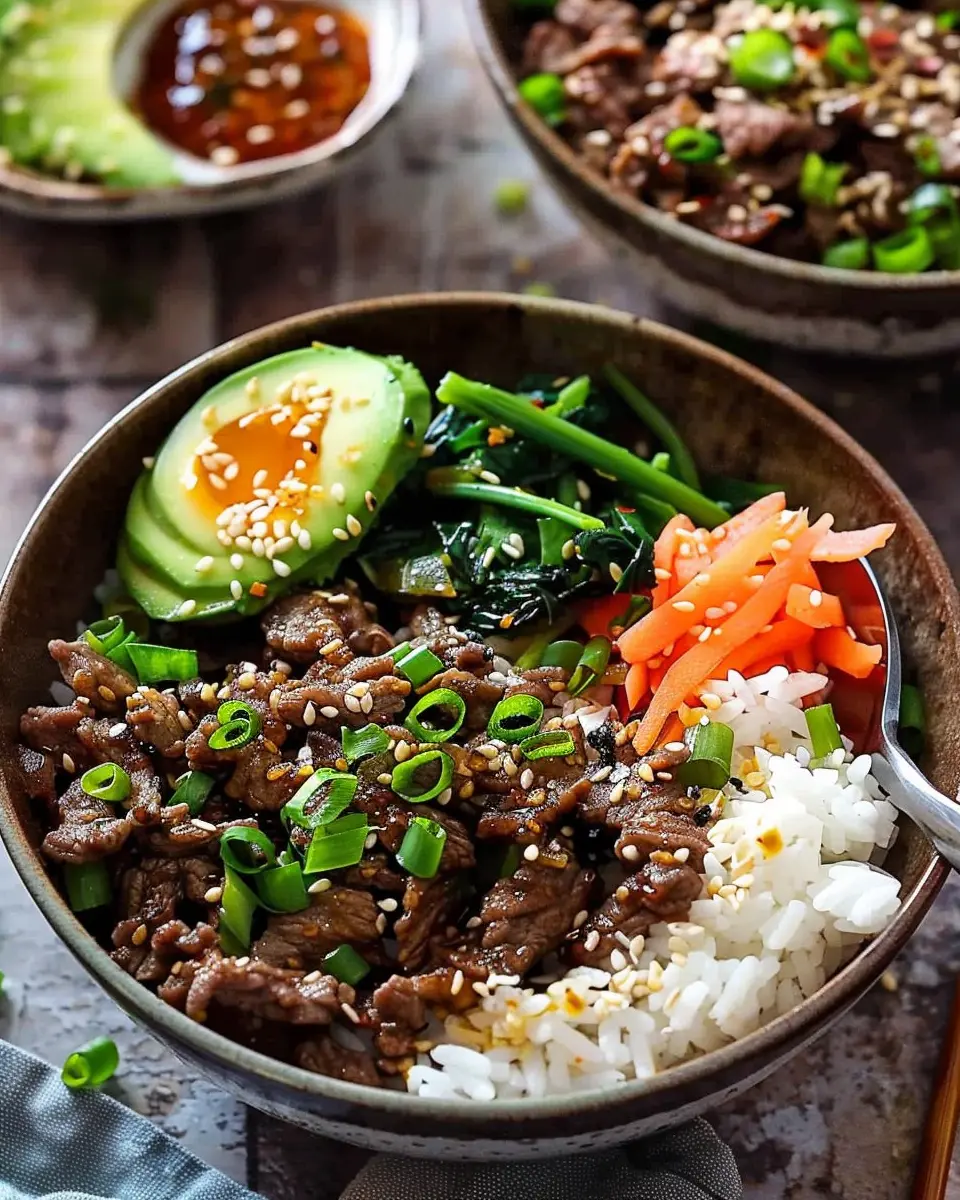
Variations on Korean Beef Bulgogi Rice Bowls
When it comes to making your Korean beef bulgogi rice bowls stand out, toppings and presentation can make all the difference. Here are some fantastic ways to customize your dish and explore different serving styles.
Customize Your Toppings
The beauty of rice bowls is in the flexibility of toppings. You can easily make your Korean beef bulgogi rice bowls your own by mixing and matching from this list:
- Fresh Vegetables: Think sliced cucumbers, shredded carrots, or spicy radish kimchi for crunch and zest.
- Herbs: Add a sprinkle of green onions or cilantro to brighten the flavor.
- Nuts and Seeds: Toasted sesame seeds or crushed peanuts can bring a delightful texture.
- Sauces: Drizzle with additional gochujang sauce or a splash of soy sauce for an extra kick.
Feel free to get creative! Have leftover roasted vegetables? Toss them on top for a boost of flavor and nutrition.
Different Ways to Serve Bulgogi
While traditional rice bowls are delicious, consider these alternative serving suggestions for your Korean beef bulgogi:
- Lettuce Wraps: For a fresh twist, serve your bulgogi in large lettuce leaves. This makes for a fun, low-carb option perfect for gatherings.
- Bulgogi Tacos: Use corn tortillas filled with bulgogi and topped with fresh veggies for a fusion twist that’s great for taco night.
- Rice Paper Rolls: Wrap your bulgogi in rice paper with vermicelli noodles and crunchy vegetables, served with a dipping sauce for a refreshing snack.
These variations not only keep your meals exciting but also allow you to explore different flavors and textures that pair beautifully with the marinated beef. So, why not try a new approach and elevate your dining experience?
Cooking Tips and Notes for Korean Beef Bulgogi Rice Bowls
Avoiding Common Pitfalls
When making Korean beef bulgogi rice bowls, the key is to avoid overcooking the beef. Cooking it too long can lead to tough meat. Ideally, you want it to be tender and juicy—cook just until it turns brown. Another tip? Allow the marinated beef to sit for at least 30 minutes at room temperature before cooking. This rest period enhances the flavor. For perfect rice, consider using short-grain rice, as it complements the dish beautifully by holding together.
Choosing the Right Beef and Spices
Selecting the right cut of beef is crucial for achieving that tender texture. Flank or sirloin steaks are excellent choices due to their rich flavor and tenderness. When it comes to spices, a good marinade makes all the difference. Opt for a mix of soy sauce, sesame oil, and a touch of brown sugar for authenticity. For an extra kick, consider adding gochugaru (Korean red pepper flakes) for a subtle heat. These choices not only elevate your Korean beef bulgogi rice bowls, but they also make them irresistibly delicious!
For more on choosing the right beef cuts, you can visit Beef It’s What’s For Dinner.
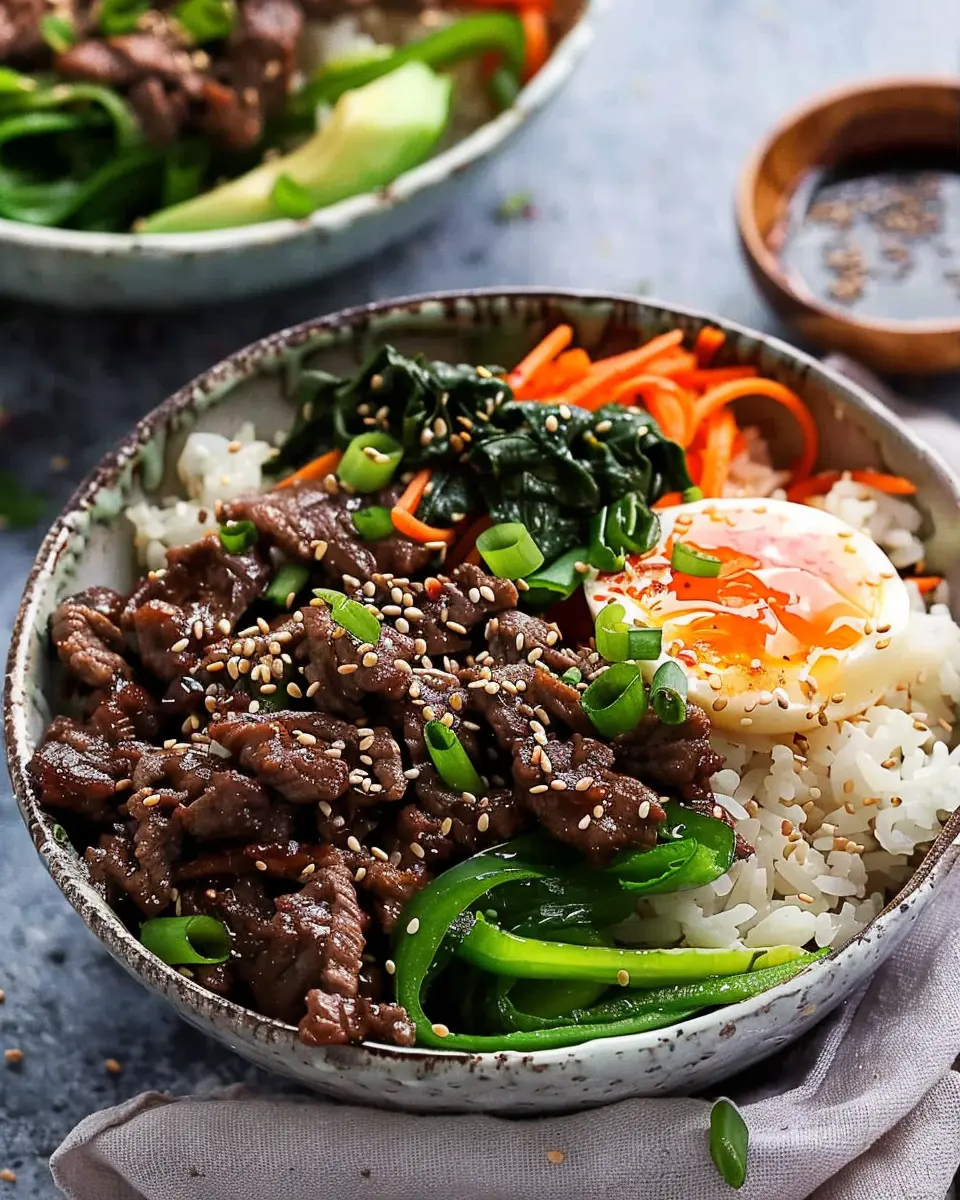
Serving suggestions for Korean Beef Bulgogi Rice Bowls
Pairing with side dishes for a full meal
To create a well-rounded dining experience with your Korean Beef Bulgogi Rice Bowls, consider serving these delicious side dishes:
- Kimchi: This fermented staple offers a spicy, tangy kick that complements the sweetness of the bulgogi perfectly.
- Pickled Vegetables: A selection of pickled radishes or cucumbers adds a refreshing crunch and balances the dish’s richness.
- Asian Slaw: A crisp slaw with sesame dressing can provide a delightful contrast in texture and flavor. Check out a simple recipe here.
These side dishes elevate your meal and boost its nutritional value, making it satisfying and wholesome.
Recommendations for drinks that complement the dish
When it comes to beverages, you’ll want something that enhances the flavors of your Korean Beef Bulgogi Rice Bowls. Here are a few great options:
- Iced Green Tea: This refreshing drink not only cools you down but also provides a subtle earthiness that pairs wonderfully with bulgogi.
- Sparkling Water with Lemon: The fizz and acidity cleanse the palate, making your meal even more enjoyable.
- Korean Barley Tea (Boricha): This nutty infusion is a classic choice that adds authenticity and depth to your dining experience.
With these sides and drinks, you’ll have a satisfying meal that captures the heart of Korean cuisine!
Time breakdown for Korean Beef Bulgogi Rice Bowls
Preparation time
Preparing your Korean Beef Bulgogi Rice Bowls is a breeze! You’ll need about 15 minutes to slice the beef, chop your veggies, and whip up that delicious marinade. Don’t forget, a little planning can make this stage even smoother—maybe have your ingredients prepped in advance?
Cooking time
Cooking it up will take roughly 15-20 minutes. This includes stir-frying the beef to juicy perfection and cooking your rice. Keep your eye on the beef to achieve the ideal balance between tenderness and flavor.
Total time
All in all, you’re looking at about 30-35 minutes to get these delightful bowls on the table. Short on time? This dish is perfect for weeknight dinners when you need something quick yet satisfying. For more tips on quick meals, check out this guide on making great food fast! Enjoy your cooking adventure!
Nutritional Facts for Korean Beef Bulgogi Rice Bowls
When diving into the delicious world of Korean Beef Bulgogi Rice Bowls, understanding the nutritional profile can help you make informed choices.
Calories
A typical serving of these vibrant rice bowls contains approximately 500–600 calories. This count can vary based on ingredients and portion size, making it easy to adjust for personal dietary goals.
Protein Content
One of the standout features of Korean Beef Bulgogi Rice Bowls is their robust protein content. A serving generally provides around 25–35 grams of protein, predominantly sourced from the marinated beef. This protein is essential for muscle repair and overall health, making it a great post-workout meal.
Carbohydrates and Fats
In terms of carbohydrates, you can expect about 60–70 grams per serving, mainly from the rice and vegetables. While these bowls are rich in carbs, they offer a good balance of healthy fats, usually around 15–20 grams, primarily from any added sesame oil or toppings like avocado.
If you’re curious about balancing your meals with more nutrients, check out resources from the USDA’s MyPlate for guidelines on healthy eating habits.
FAQs about Korean Beef Bulgogi Rice Bowls
Can I use chicken or tofu instead of beef?
Absolutely! While Korean beef bulgogi rice bowls traditionally feature marinated beef for that savory, rich flavor, you can easily switch it up. Chicken breast or thighs offer a lighter alternative, while tofu serves as a fantastic option for a plant-based dish. Just make sure to adjust your marinating time: chicken usually needs about 30 minutes, and tofu benefits from marinating at least an hour, allowing those flavors to absorb.
How do I store leftovers?
Storing your Korean beef bulgogi rice bowls is simple! To maintain their deliciousness, place your leftovers in an airtight container. They will stay fresh in the refrigerator for 3-4 days. Reheat on the stovetop or microwave, adding a splash of water or broth to keep the rice moist. If you want, you can also freeze the components separately for up to 3 months for an easy meal whenever you’re craving bulgogi!
What can I use as a substitute for soy sauce?
If soy sauce isn’t in your pantry—or if you’re looking for a gluten-free option—there are several great substitutes. Coconut aminos is a popular choice among those who want a milder, sweeter flavor. Alternatively, liquid aminos deliver a similar taste but with a twist of added nutrients. You can also create a mix using beef broth, vinegar, and a pinch of salt to mimic that savory umami kick.
For more insights on ingredient substitutes, check out this informative guide. Remember, the magic of cooking lies in experimentation, so don’t hesitate to try different options that suit your taste!
Conclusion on Korean Beef Bulgogi Rice Bowls
Creating your own Korean beef bulgogi rice bowls at home elevates your meal experience beyond mere fast food. Not only do you control the ingredients, ensuring freshness and quality, but you also get to customize flavors to your liking. This home-cooked delight is a fantastic option for busy young professionals seeking healthier alternatives without sacrificing taste.
Making your own meals fosters creativity in the kitchen and can save you money in the long run. Plus, the satisfaction of preparing a delicious dish from scratch can’t be beaten! For more recipes on quick and enjoyable meals, check out sites like Serious Eats or Food Network for inspiration.
PrintKorean Beef Bulgogi Rice Bowls: Easy, Flavor-Packed Delight
A delicious fusion dish featuring tender marinated beef, served over rice and topped with fresh vegetables.
- Prep Time: 30 minutes
- Cook Time: 10 minutes
- Total Time: 40 minutes
- Yield: 4 servings 1x
- Category: Main Course
- Method: Stir-fry
- Cuisine: Korean
- Diet: Gluten-Free
Ingredients
- 1 pound beef sirloin, thinly sliced
- 1/4 cup soy sauce
- 2 tablespoons sesame oil
- 2 tablespoons sugar
- 4 cloves garlic, minced
- 1 inch ginger, grated
- 1 carrot, julienned
- 1 bell pepper, sliced
- 4 cups cooked rice
- 2 green onions, chopped
Instructions
- In a bowl, mix soy sauce, sesame oil, sugar, garlic, and ginger. Add the beef and marinate for at least 30 minutes.
- Heat a large skillet over medium-high heat. Add the marinated beef and cook until browned, about 5-7 minutes.
- Add the carrots and bell pepper to the skillet and stir-fry for another 3-4 minutes.
- Serve the beef mixture over cooked rice and garnish with green onions.
Notes
- For extra flavor, add sesame seeds on top before serving.
- Feel free to customize the vegetables according to your preference.
Nutrition
- Serving Size: 1 bowl
- Calories: 500
- Sugar: 5g
- Sodium: 900mg
- Fat: 20g
- Saturated Fat: 5g
- Unsaturated Fat: 15g
- Trans Fat: 0g
- Carbohydrates: 60g
- Fiber: 2g
- Protein: 25g
- Cholesterol: 70mg
Keywords: Korean Beef Bulgogi Rice Bowls